
Over the past few years, I’ve spent a lot of time inside conversations about transformation. Digital. AI. Operating models. And more recently, sustainability.
What’s striking is how similar these conversations are. Strong intent. Clear urgency. Broad agreement on the “what.” And then… things start to break down.
Not because people don’t care, but because organizations don’t know how to operationalize what they’re saying they want to do
In retail and consumer businesses, sustainability is often framed at a high level. Circular models. Resale. Responsible sourcing. Reduced waste. All important. All necessary.
But inside the organization, those ideas quickly collide with reality. Merchandising calendars are fixed. Pricing strategies are tightly managed. Inventory systems weren’t built for circular flow. Teams are already operating at capacity.
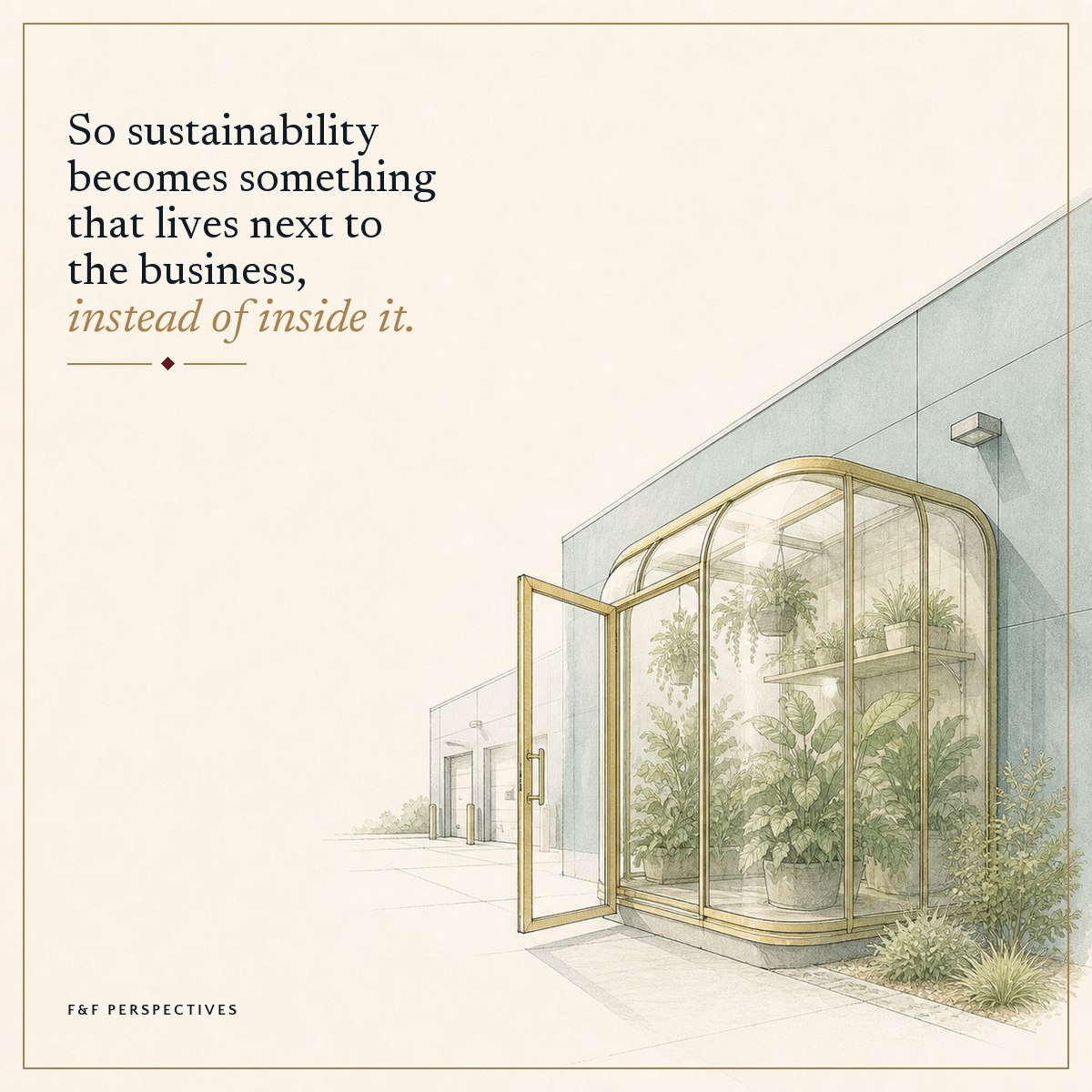
So sustainability becomes something that lives next to the business, instead of inside it. We’ve seen this before with digital. We’re seeing it now with AI. And we’re seeing it again with sustainability.
A new priority emerges, it’s positioned as critical, and teams are asked to adapt. But the operating model doesn’t evolve fast enough to support it.
So the burden falls on individuals to figure it out on top of everything else. That’s where progress slows.
They’re not just brand or marketing initiatives. They challenge how retail businesses actually operate, from inventory flow to pricing, systems, and team structure. This isn’t a surface-level shift. It’s an operating model shift, and most organizations are still early.
At the same time, this is one of the most important moments in retail. The intersection of sustainability, technology, and consumer behavior is starting to drive real change in how businesses operate.
The companies that move forward won’t be the ones with the strongest messaging. They’ll be the ones that redesign how their teams work, build systems that support new models, and make clear decisions about trade-offs. That’s the real unlock.
Right now, I’m paying close attention to how organizations start to bridge this gap. Not just through ideas, but through clearer operating structures, stronger cross-functional alignment, and more realistic approaches to change.
Because ultimately, sustainability won’t be solved through intention alone.
It will be solved the same way everything else is. Through execution.