I don’t buy the trading down story.
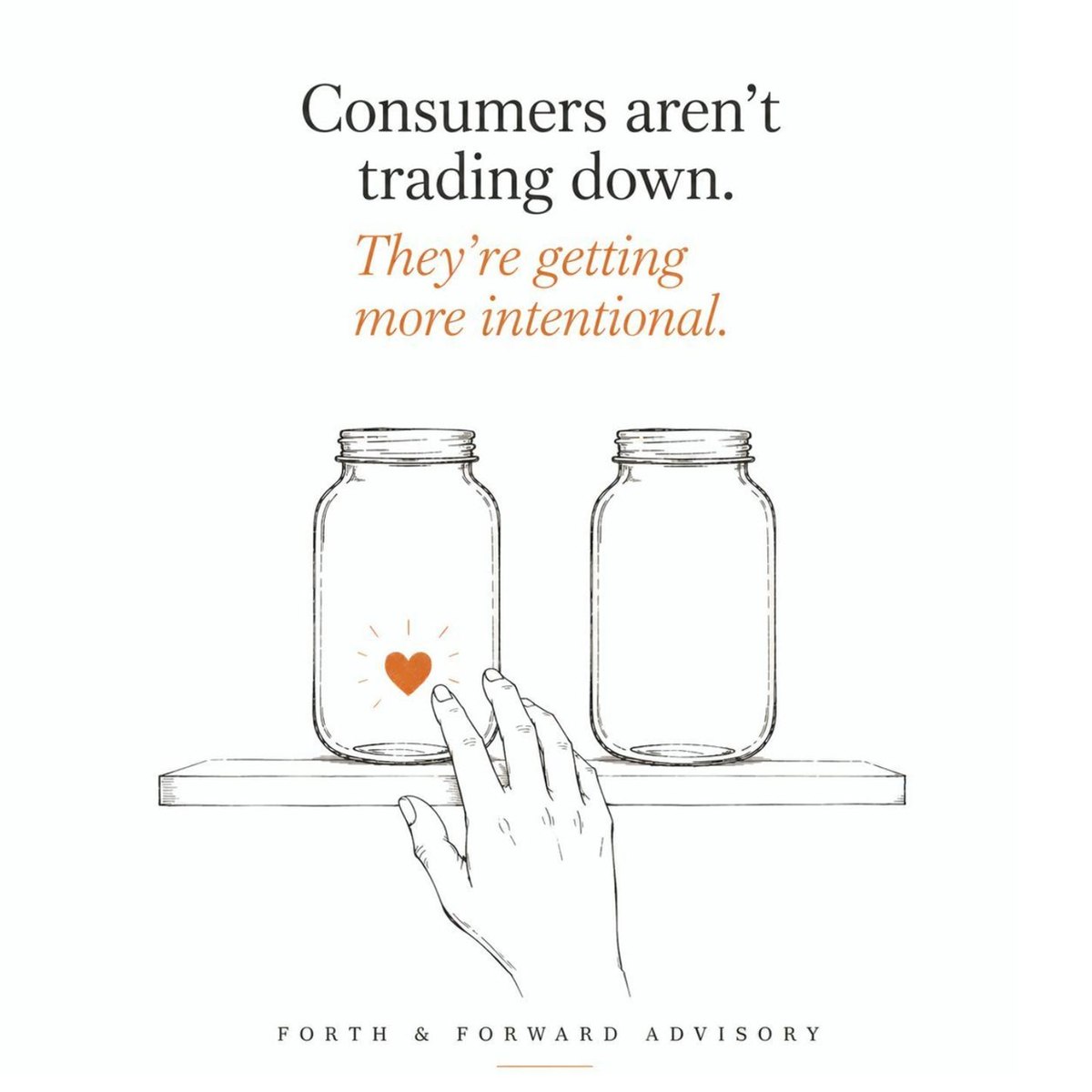
For a while, that has been the easy explanation for everything happening with the consumer. Prices went up, people got careful, and they will come back when things settle. I don’t think that’s it. Shoppers aren’t simply spending less. They’re getting more deliberate about what deserves their money.
You can see it in the smallest decisions. Someone who always bought the name brand reaches for the store brand, tries it, and never goes back. Not because they couldn’t afford it. Because they decided the difference wasn’t worth paying for.
The numbers caught up to what a lot of us were already watching. US private label hit a record $282.8 billion last year and now makes up 23.5% of everything sold by unit, up from 21.6% four years ago (PLMA, on Circana data). It isn’t a low income story either. Store brands keep gaining ground with households earning over $100,000, and a third of Gen Z’s private label spend now goes to premium tiers, not the cheap stuff (eMarketer).
That premium detail is the one I’d sit with. People aren’t grabbing the store brand to save a dollar and feeling bad about it. They think it’s just as good, sometimes better, and they’re a little annoyed they ever paid more. Once a customer decides that, the extra you used to charge doesn’t come back on its own.
And it isn’t only products. The same instinct shows up in how people spend their time, attention, and loyalty. Anyone who has sat in a merchandising meeting feels it. We built plans around habit, around autopilot buying. That autopilot is gone.
The teams getting this right aren’t bolting on a cheaper line and calling it value. They’re treating their own brand like a brand, with a quality bar they’d defend in a room. Shoppers can tell the difference, and they reward it. The ones who win here won’t have the cleverest promotion. They’ll understand why their customer is choosing differently in the first place.
If this is temporary, you can wait it out. If people have really changed how they decide what’s worth paying for, that’s a different conversation. From where I sit, it’s the second one. In your business, are you treating this as a pricing problem to manage, or a customer who has changed for good? I’d like to know where you’re landing.