
We spend a lot of time in business talking about the cost of technology.
- The cost of systems.
- The cost of labor.
- The cost of capital.
But we rarely talk about something that can be just as expensive inside organizations.
The cost of thinking.
Recently I read an MIT article called “The Cost of Thinking” by Jennifer Michalowski. Researchers observed that both humans and AI systems spend more effort solving harder problems. The more complex the challenge, the more reasoning steps it takes to reach an answer.
In other words, thinking itself requires effort.
That idea becomes interesting when you look at how decisions actually happen inside large organizations.
Thinking well requires more than intelligence or data.
It requires context. Alignment. Multiple teams seeing the same problem clearly enough to move forward together.
And that is often where the real cost shows up.
Retail makes this especially visible.
A decision about assortment touches merchandising, planning, supply chain, digital commerce, marketing, and stores. What looks simple on paper often requires coordination across half the organization.
Right now many companies are investing heavily in AI and automation. These technologies are powerful and can surface insights faster than any human team could alone.
But they do not remove the need for thinking.
If anything, they increase the importance of human judgment.
Someone still has to frame the problem. Interpret the output. Make the call when the data and the broader business context do not perfectly align.
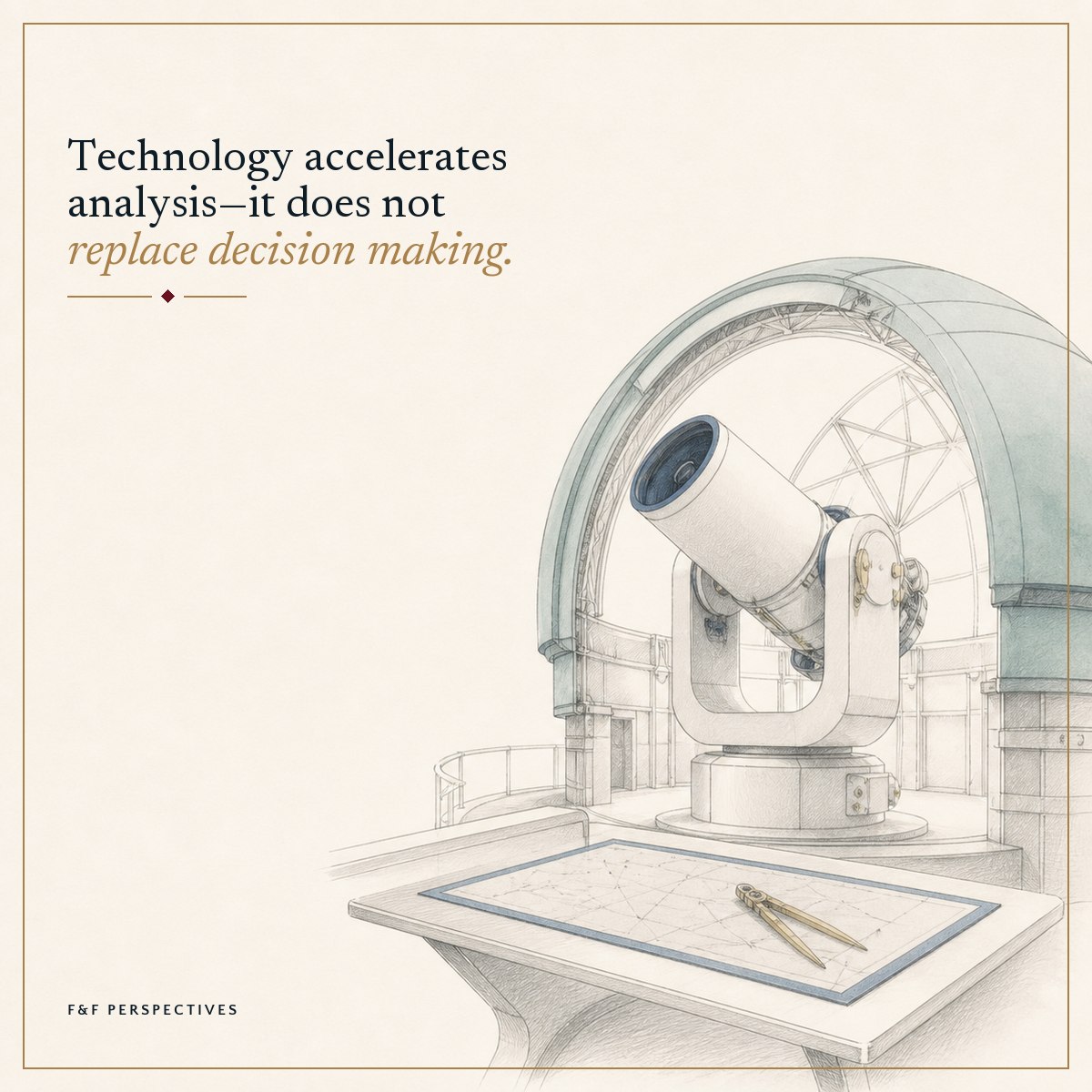
Technology accelerates analysis.
It does not replace decision making.
Retail will absolutely continue evolving through automation and AI. But the organizations that benefit most will be the ones that design their operating models with the human side of execution in mind.
Because in complex businesses like retail, the hardest problems are rarely just technical.
They are human.
If you are working through these challenges inside your organization, I always enjoy exchanging perspectives with other operators navigating similar transformations.