Most companies describe AI as a technology rollout.
That may be how it is funded. It is not how it is experienced.
For the people doing the work, AI is quietly changing the job.
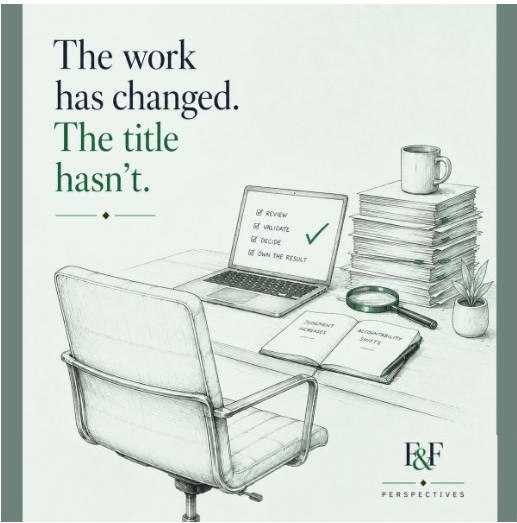
The analyst is no longer only producing an answer. They are expected to evaluate one.
A merchant may be asked to act on a recommendation they did not create.
A manager becomes the final checkpoint on work that has already moved through a model, a platform, and multiple systems.
Judgment is being added.
Tasks are disappearing.
Accountability is shifting.
But the title stays the same.
So do the job description, performance expectations, career path, and often the compensation.
This is where AI adoption becomes an organizational challenge, not a technology challenge.
Not someday.
Now.
Who owns the output?
Who is responsible for catching the mistake?
Which decisions still require human judgment?
What happens when efficiency for the organization creates more review, interpretation, and exception handling for the employee?
Many organizations are measuring AI adoption.
Far fewer are examining how the work itself is already changing.
The more important question may not be how quickly AI is being deployed.
It is how intentionally work is being redesigned around it.
Because AI doesn’t simply make today’s job faster.
It changes where expertise lives. It changes how judgment is exercised. It changes where accountability sits. It changes who carries the risk when the answer is wrong.
The work has already changed.
In many organizations, the role has too.
The title just hasn’t caught up.
Leaders have a choice.
Design these new roles intentionally, with clear expectations, decision rights, accountability, and career paths. Or leave employees to redefine them one decision at a time.
The organizations that thrive won’t simply adopt AI faster.
They’ll redesign work better.