
Dr. Fei-Fei Li’s MasterClass, AI’s Future and Yours, expanded on ideas I have been exploring about the current and future AI era, especially this question:
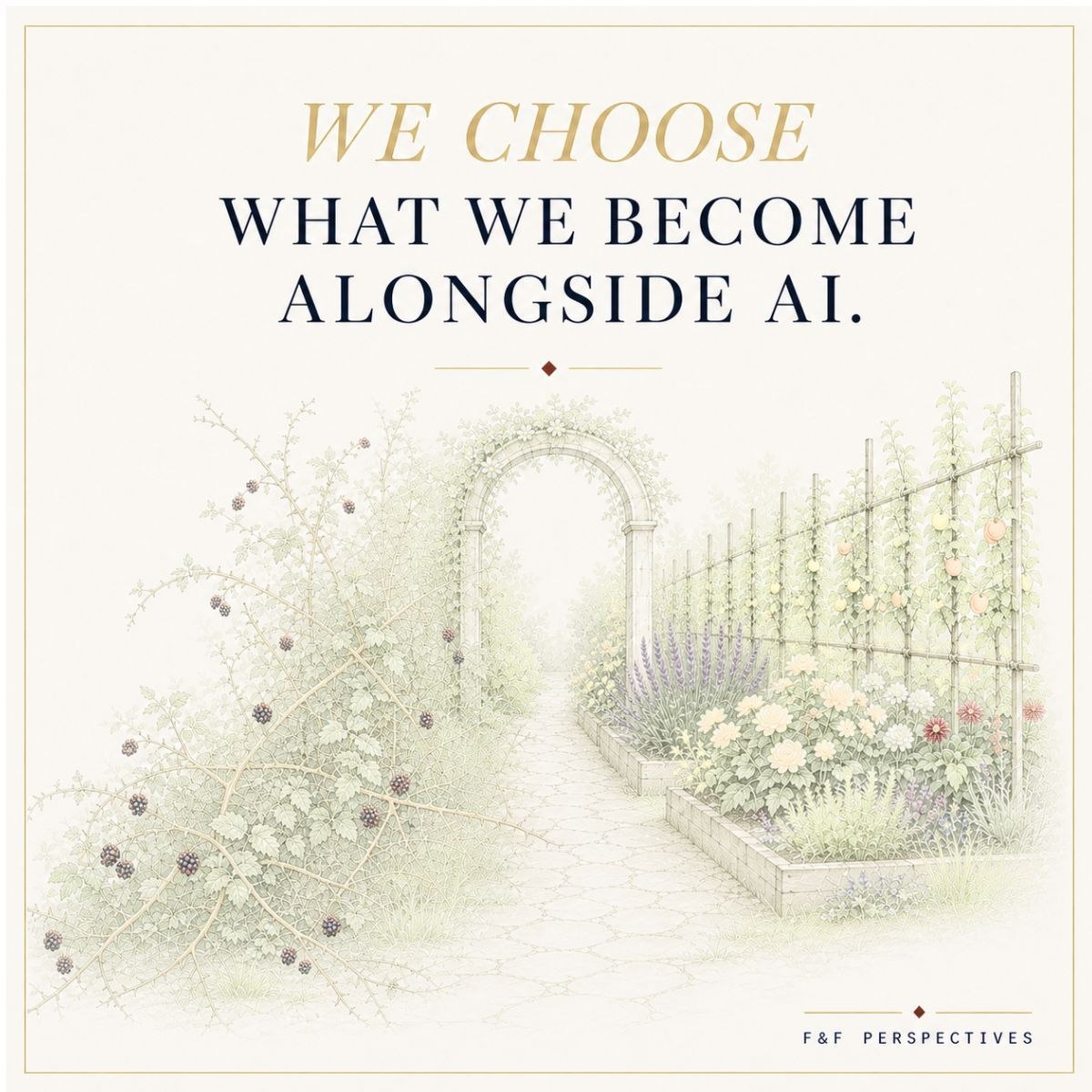
Not only what AI will become, but what we will choose to become alongside it.
Much of the AI conversation still focuses on two extremes: The promise that technology will solve nearly everything The fear that it will replace nearly everyone
Neither gives people much of a role.
Dr. Li offers a more useful frame: AI is becoming a civilization-shaping technology, changing how work gets done, decisions get made, and responsibility is shared.
The real divide may not be between people and AI, but between those who are equipped and empowered to use it and those who are not.
Human × AI evolution is about more than learning new tools.
Retail makes this tangible. AI can forecast demand, personalize experiences, and optimize inventory at extraordinary speed. But speed does not replace context.
People must still decide:
- Which signals matter
- When to question a recommendation
- When efficiency conflicts with trust or long-term customer value
Human contribution becomes more valuable here: interpreting imperfect signals, recognizing patterns, exercising judgment, and deciding what is worth doing.
AI can expand the possibilities. It does not remove accountability.
Agency must also be designed into the organization. If decision rights are unclear or speed is rewarded over accuracy, people will not challenge AI recommendations.
Leaders must define:
- Who decides
- Who can intervene
- Where accountability sits
These are leadership and operating-model decisions, not simply technical ones.
Dr. Li ends as an optimist. That optimism resonates with me. “I think every one of us, every individual, has a responsibility to ourselves, to our community, and to our society, to rise to the occasion.”
AI will continue to evolve. The question is whether our judgment, participation, and accountability will evolve with it.
Intelligence is becoming abundant. Agency still has to be built.
Where is your organization intentionally building human agency, and where might it be unintentionally designing it out?