
Walk into almost any organization and the conversations sound familiar. The technology isn’t moving fast enough. Priorities aren’t clear. Decisions take too long. Teams aren’t aligned.
Another platform, another process, or another reorganization is usually presented as the solution. Sometimes those changes help. More often, they improve a symptom without addressing the system underneath it.
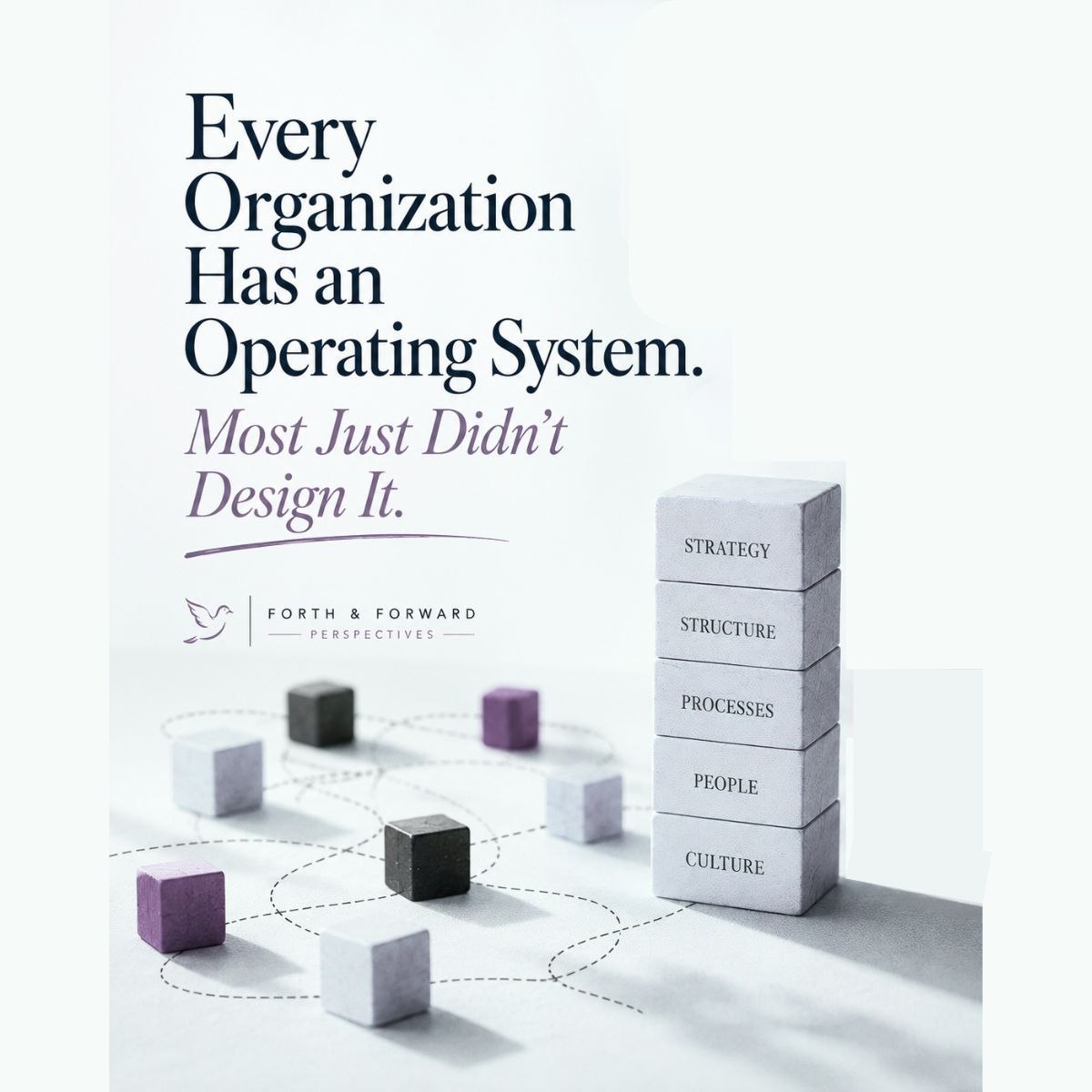
After more than twenty years working across merchandising, planning, marketing, operations, and transformation, I’ve come to believe that organizations rarely operate the way they’re described in strategy presentations. They operate according to something much more practical: how decisions get made, how information moves, how priorities compete, and what people do when the playbook no longer has the answer. In other words, every organization has an operating system.
Not the technology stack. The human one.
It’s largely invisible because it’s embedded in everyday work. You see it in who gets invited into a decision, how quickly issues surface, whether functions solve problems together or in isolation, and whether people optimize for their own objectives or the organization’s. Most of these operating systems were never intentionally designed. They evolved over time through leadership changes, reorganizations, successful habits, inherited processes, and countless small decisions that eventually became “the way we work.”
That worked reasonably well when the pace of change was slower. Today’s environment is different. AI is accelerating analysis. Automation is accelerating execution. Teams have access to better information than ever before. Almost every function is becoming more capable. Yet many organizations still struggle to move together.
Technology improves capability. It doesn’t automatically improve coordination.
Marketing creates faster. Planning forecasts better. Operations executes more efficiently. Every function becomes stronger. The customer, however, still experiences one company. Not a collection of high-performing departments.
That’s why I believe the next competitive advantage won’t come from technology alone. It will come from organizations that intentionally design how people think, decide, align, and execute together. Every organization already has an operating system. The real question is whether it’s running by design, or simply by default.
Where have you watched the way people actually work override what the strategy said?